Portable Generator Transfer Switch Installation in Myrtle Beach, SC
No. Plugging a portable generator into a wall outlet can backfeed electricity into the utility grid, which can seriously injure or kill a lineworker restoring power, and it's against code everywhere. A proper interlock kit or manual transfer switch is what makes it safe and legal.
Standard scheduling runs during regular business hours. Ahead-of-storm-season demand books out early — see the hurricane prep guide for timing.
Is it safe to just plug my portable generator into an outlet?
This isn't a technicality installers use to upsell a part. Backfeeding is a documented, real hazard, and it's the single most common reason portable generator transfer switch installation gets requested after someone reads about it or has a close call themselves.
Two ways in
Interlock Kit or Inlet Box: What's the Difference?
An interlock kit is a mechanical bracket added to your existing panel that physically prevents the main breaker and a dedicated generator breaker from being on at the same time. You run an extension cord from the generator to a breaker in your existing panel. No sub-panel, no rewiring of circuits.
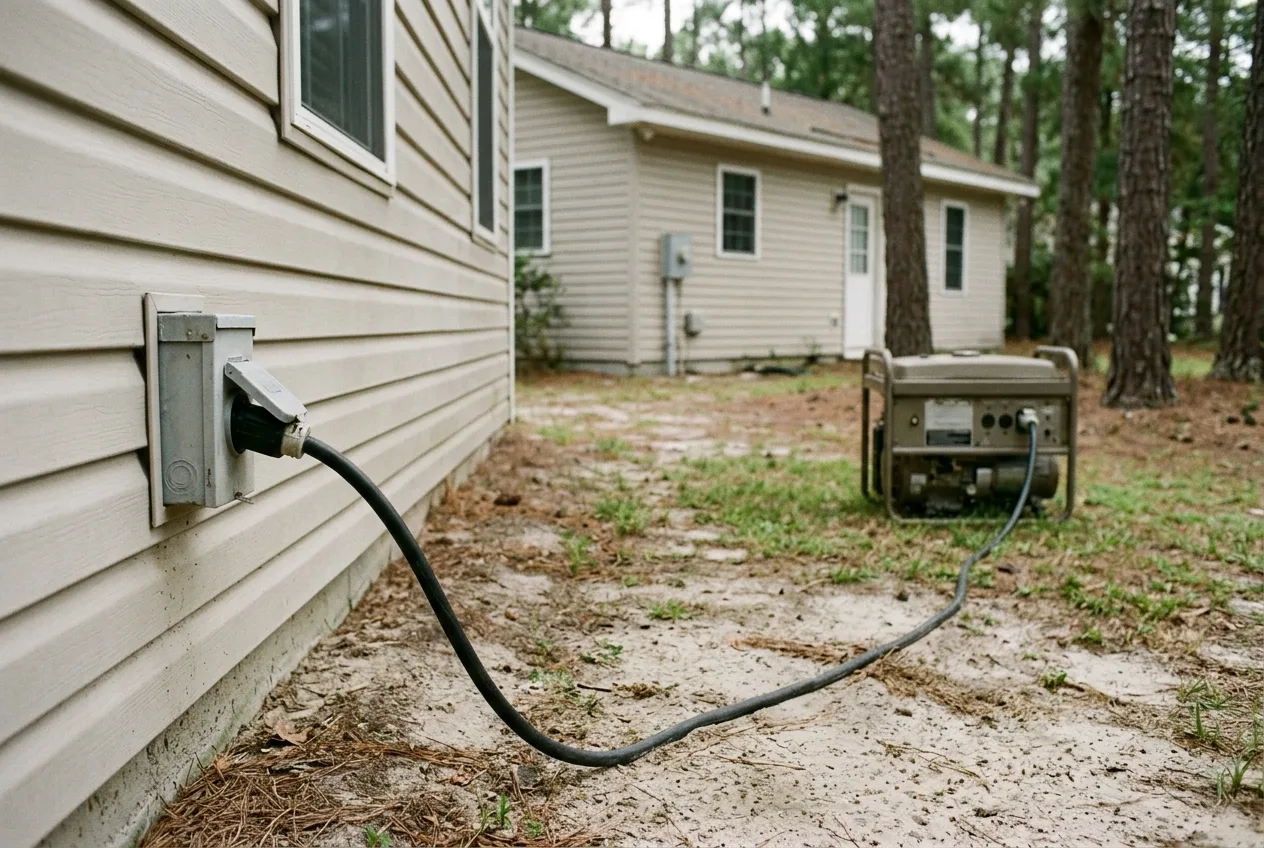
A manual transfer switch, sometimes paired with an exterior inlet box, is a small dedicated sub-panel with its own set of switches for the circuits you choose to back up. You plug the generator into a weatherproof inlet on the outside of the house instead of running a cord through a window or door.
Both are legal, code-compliant ways to connect a portable generator. The interlock is cheaper and simpler; the transfer switch gives you a cleaner, permanent hookup with a dedicated exterior connection point and lets you pick specific circuits rather than whatever's on the breaker you chose.
What you get
What's Included in a Manual Transfer Setup?
- Interlock kit or transfer switch hardwareMatched to your panel brand and breaker layout, since interlock kits aren't universal across every panel.
- Dedicated generator breakerSized to your portable unit's output, installed as part of the interlock or switch setup.
- Exterior inlet box, where usedA weatherproof connection point so the generator plugs in from outside without a cord through a window or door.
- Permit and inspection where requiredSmaller than a standby install's permit scope, but many jurisdictions still require one for panel modifications.
- A plain walkthrough of how to use itWhat order to flip the switches or move the interlock, so you're not guessing the first time the power's actually out.
Step by step
How Does the Installation Work?
Panel and generator check
Time on site · part of the site visitConfirms your panel brand supports an interlock kit, or scopes a transfer switch if it doesn't, and checks your generator's output.
Breaker and hardware installed
Time on site · 2-4 hoursDedicated generator breaker added, and the interlock bracket or transfer switch mounted and wired.
Inlet box mounted, if used
Time on site · 1-2 hoursExterior weatherproof inlet installed and wired back to the panel or switch.
Testing and walkthrough
Time on site · 30-60 minutesSystem tested with the generator connected, and you're shown the exact steps to use it safely.
A portable generator that connects safely and legally through a dedicated breaker, without a cord run through a window or any backfeed risk to the utility grid.
What it runs
What Does This Cost Compared to an Automatic Switch?
| Item | Typical price |
|---|---|
| Interlock kit, installed / installedBracket, dedicated breaker and labor; the cheapest code-legal option. | $300-$900 |
| Manual transfer switch (8-10 circuits), installed / installedDedicated sub-panel with individual circuit switches. | $1,200-$1,700 |
| Exterior generator inlet box / add-onOften bundled with either interlock or transfer switch installation. | $150-$350 |
| Automatic transfer switch, for comparison / installedSee the automatic transfer switch page: a different product for a different use case. | $1,500-$3,500 |
These are typical ranges for Grand Strand; your exact price depends on your panel brand and how many circuits you want the generator to cover.
Prices here are for the switch or interlock only, not the portable generator itself, which most homeowners already own or buy separately.
Head to head
Manual Interlock vs. Automatic Transfer Switch: Which Do You Need?
Cost · Who has to be there · What it covers
Manual interlock or transfer switch
Best for
Homeowners who are reliably present during outages and comfortable starting and connecting a generator themselves
Works when
- Far lower upfront cost, often a fraction of a standby system
- No fixed generator sitting outside year-round; the unit can be stored and used elsewhere too
Costs you
- Requires someone to physically fuel, start and connect the generator every time
- Covers only the circuits you can run on the portable unit's output, not the whole house
Automatic transfer switch with a standby generator
Best for
Homes where nobody can guarantee being present, or where the outage risk justifies the added cost
Works when
- Starts and switches over on its own within seconds, with nobody needing to be home
- Can be sized to cover most or all of the house, including central air
Costs you
- Several times the cost of a manual setup once you include the standby generator itself
- Requires a permitted fuel connection and pad, not just an electrical hookup
Verdict
If you're usually home, comfortable running the equipment, and your budget favors the cheaper option, a manual interlock or transfer switch is a legitimate, code-legal answer. You don't need to spend standby-generator money to be safe. If nobody's reliably there when the power goes, or the outage risk is severe enough that automatic backup matters more than cost, that's the case for pairing a standby generator with an automatic switch instead.
Straight answers
Is it safe to plug a portable generator directly into an outlet?
No. It risks backfeeding electricity into the utility grid, which is dangerous to lineworkers and against code everywhere. An interlock kit or manual transfer switch is what makes the connection safe and legal.
What's the difference between an interlock kit and a generator inlet box?
An interlock kit is a bracket on your existing panel that prevents the main breaker and generator breaker from both being on. An inlet box is a weatherproof exterior plug so the generator connects from outside without a cord through a window; the two are often installed together.
How much does a manual transfer switch installation cost?
An interlock kit runs $300 to $900 installed; a full manual transfer switch with multiple circuits runs $1,200 to $1,700 installed. Both are considerably cheaper than an automatic transfer switch.
Can I upgrade to an automatic switch later?
Yes, in most cases. An interlock kit doesn't rule out adding automatic switching down the road if you later buy a standby generator, though the two systems aren't combined; you'd choose one or the other for a given setup.
What size portable generator works with a whole-panel interlock?
It depends on your panel's main breaker size and what you want to run, not the interlock hardware itself, which just prevents unsafe backfeeding. Most households run a 5,000 to 10,000 running-watt portable generator through an interlock and choose which circuits to power at the panel.
Is this legal to DIY, or does it have to be inspected?
Panel work like this should be done, or at minimum inspected, by a licensed electrician, and many jurisdictions require a permit for panel modifications even on a smaller interlock job. Skipping that step is a common way homeowners end up with an insurance problem if something goes wrong later.
Locked in.
Book it before the forecast turns.
This is one of the fastest, most affordable jobs on this site. Most interlock installs are scheduled and done within a week.
Call it in or send the details — a real quote comes back either way.