Standby vs. Portable Generator: Which One Fits Your Home?
A standby generator is permanently installed, runs on natural gas or propane, and starts itself within seconds of an outage; a portable generator has to be fueled, started and connected by someone at home, and it costs a fraction as much.
Standard scheduling runs during regular business hours. Ahead-of-storm-season demand books out early — see the hurricane prep guide for timing.
What's the real difference between a standby and a portable generator?
Neither is the objectively 'better' generator. Which one is right depends less on your house and more on how long outages actually run where you live, and whether someone can reliably be there to run a portable unit when the power goes.
Two ways in
What's the Core Difference Between Standby and Portable?
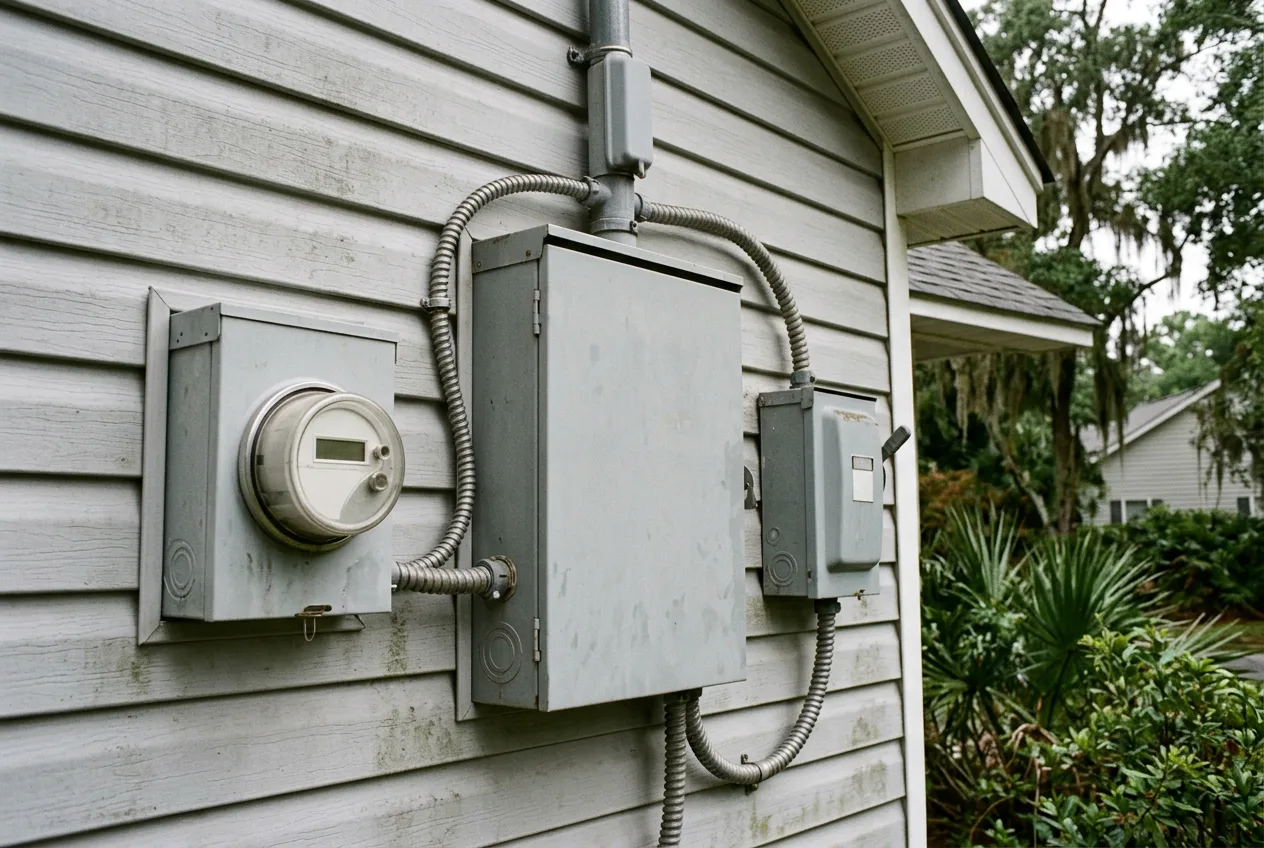
A standby system sits outside the home on its own pad, wired into an automatic transfer switch that constantly monitors utility power. The moment it senses an outage, it starts the generator and switches your panel over, typically within 10 to 30 seconds, whether you're home, asleep, or three states away.
A portable generator does none of that on its own.
It has to be pulled out of storage, fueled, started, and connected, ideally through a properly installed interlock kit or manual transfer switch. Never run an extension cord through a window or backfeed a wall outlet; that risks seriously injuring a utility worker restoring power on the line.
That gap in effort is the whole story. A standby system trades a much higher upfront cost for removing the human step entirely. A portable generator keeps the cost low but keeps you as the switch.
Side by side
Cost Comparison, Honestly
| Type | Upfront cost | Ongoing cost |
|---|---|---|
| Portable + interlock kit | $300-$900 for the switch, plus $500-$2,500 for the generator | Fuel only when running, plus periodic maintenance |
| Portable + manual transfer switch | $1,200-$1,700 for the switch, plus the generator itself | Same as above |
| Standby, 13-17kW (essential circuits) | $9,000-$14,000, fully installed | Annual maintenance around $300-$600; higher fuel draw when running |
| Standby, 20-26kW+ (whole-home) | $14,000-$25,000, fully installed | Same maintenance range, higher fuel draw |
A portable generator's switch cost is separate from the unit itself, which most homeowners already own or buy independently.
What each covers
What Each One Actually Powers
- Portable (5,000-10,000 running watts)Covers a smaller, chosen selection of essentials, limited by which circuits the interlock or switch connects, not the whole panel.
- 13-17kW standbyCovers essential circuits: sump pump, furnace blower, refrigerator, well pump, select lighting and outlets.
- 20-26kW+ standbyAdds central air conditioning and covers most or all of a typical home's remaining circuits at once.
Honest read
Who Genuinely Doesn't Need a Standby System
This is the part most generator sites skip, and it's the honest answer for a real share of homeowners.
If you're rarely home when outages hit, say a lot of travel or a job that keeps you away, a standby system's automatic start is solving a problem you might not have, unless the property is unattended often enough that nobody would be there to run a portable unit either. A renter who's genuinely never present when the power's out doesn't need $9,000-plus of standby capacity.
If you already own a well-maintained portable generator, know how to run it safely through a proper transfer switch, and someone capable is reliably home during the outage window, that setup is a legitimate answer, full stop. There's no safety or reliability upgrade in swapping it for a standby system beyond convenience.
And if your essential-circuit load is genuinely small (no well pump, no medical equipment, a small refrigerator and some lighting), the essential-circuits math that justifies a standby purchase for a bigger household doesn't carry the same weight for yours.
None of that is an argument against standby generators generally. It's an argument against buying one on autopilot because a neighbor has one, without checking whether your actual situation is the one this product solves.
Bottom line
Which One Makes Sense for Myrtle Beach, SC Outages?
The honest driver here is outage duration, not outage frequency. Horry County doesn't lose power constantly; most days here are unremarkable electrically. The real risk is the multi-day-to-multi-week restoration window that follows a significant tropical system, which is a different animal than a five-minute blink during a summer thunderstorm.
That distinction matters for the standby decision specifically. If the honest driver were frequent nuisance outages, a portable generator would cover most of that just fine. It's the length of the worst-case outage, and whether someone's guaranteed to be present for it, that tips the math toward standby.
Second-home and short-term-rental owners are the clearest case for standby with an automatic switch, because the owner is frequently out of state during exactly the storm that causes the outage. A portable unit does nothing in that scenario no matter how good it is.
Straight answers
What's the real difference between standby and portable generators?
A standby unit is permanently installed and starts itself automatically within seconds of an outage; a portable generator has to be manually fueled, started and connected by someone at home.
Can I make my portable generator safe to hook into my house?
Yes. An interlock kit or manual transfer switch lets you run it into your panel without backfeeding the grid, which is the real danger of plugging a portable unit straight into a wall outlet.
How much more does a standby generator cost than portable?
A fully installed standby system runs $9,000 to $25,000 depending on size, versus roughly $800 to $4,200 all-in for a portable generator plus a proper interlock or transfer switch. Standby costs several times more but removes the need for anyone to operate it.
How fast does a standby generator turn on after an outage?
Typically within 10 to 30 seconds of the automatic transfer switch detecting the outage, fast enough that most sensitive equipment barely notices the gap.
If I'm rarely home, do I even need a standby system?
It depends on whether the property is truly unattended during outages or occupied by a tenant or family member who could run a portable unit. If it's genuinely empty when the power goes, a standby system with automatic switching is the only option that actually functions in your absence.
Locked in.
Book it before the forecast turns.
A short load calculation tells you exactly which option, and which size, actually fits what you need covered, not what a generic guide assumes.
Call it in or send the details — a real quote comes back either way.